
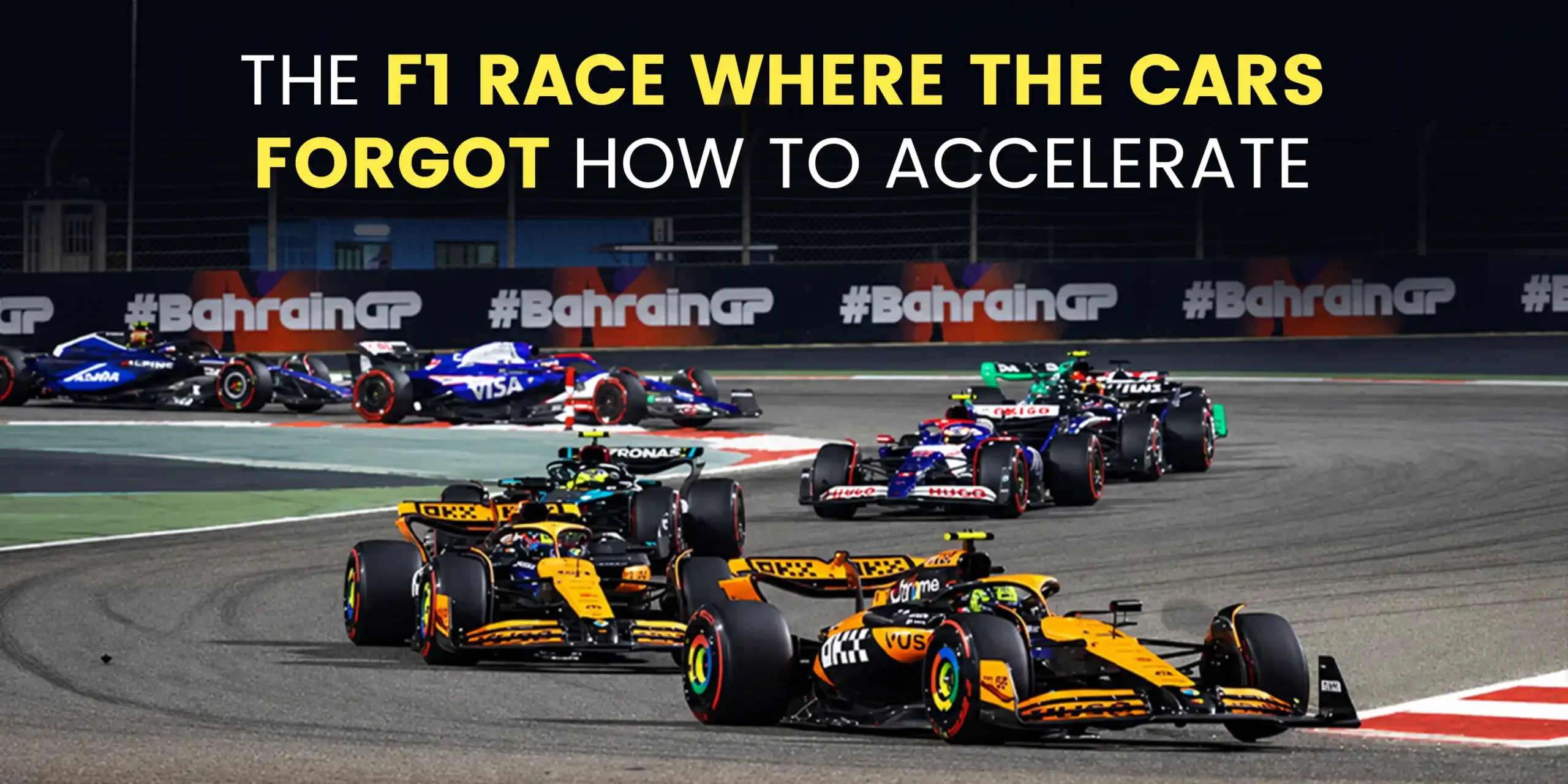
The F1 Race Where the Cars Forgot How to Accelerate
Imagine sitting in a Formula 1 car.
The rain has finally eased. The Safety Car pulls away. You press the accelerator.
And almost nothing happens.
That was the bizarre situation facing drivers at the 2026 Bahrain Grand Prix at Sepang, Malaysia, where some of the fastest racing cars on the planet suddenly found themselves moving at almost walking pace.
At first, everyone thought the rain was causing problems.
It wasn’t.
The real culprit was hiding inside the cars.
Software.
For a sport where teams spend millions chasing tiny performance gains, it was a spectacularly strange problem. These weren’t slow cars struggling for grip. They were some of the most technologically advanced racing machines in the world, suddenly unable to deliver the power their drivers were asking for.
First, there was the rain
The trouble started before the race had even begun.
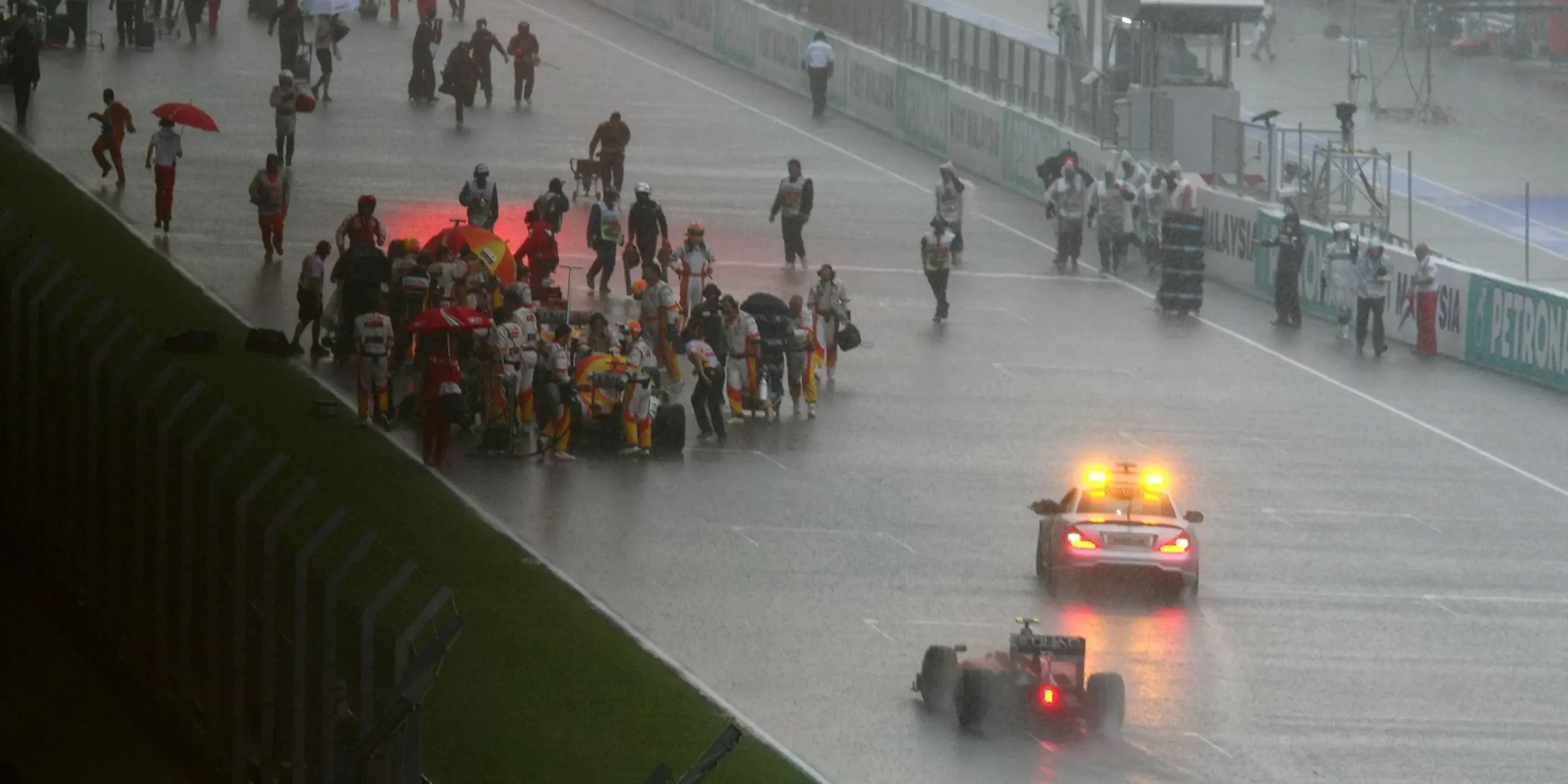
Heavy rain hit Sepang ahead of the scheduled start, leaving standing water around the circuit. The original start was delayed, and once conditions improved enough, the cars were finally sent out behind the Safety Car.
The plan was straightforward: complete at least two formation laps, assess the conditions and then get racing.
Except the cars had other ideas.
Following the Safety Car meant the drivers were travelling much more slowly than they normally would during a race. The circuit was still wet, and everyone was trying to understand how much grip was available.
Nothing about the situation seemed particularly unusual at first.
Then Max Verstappen noticed something very unusual.
Max Verstappen noticed it first
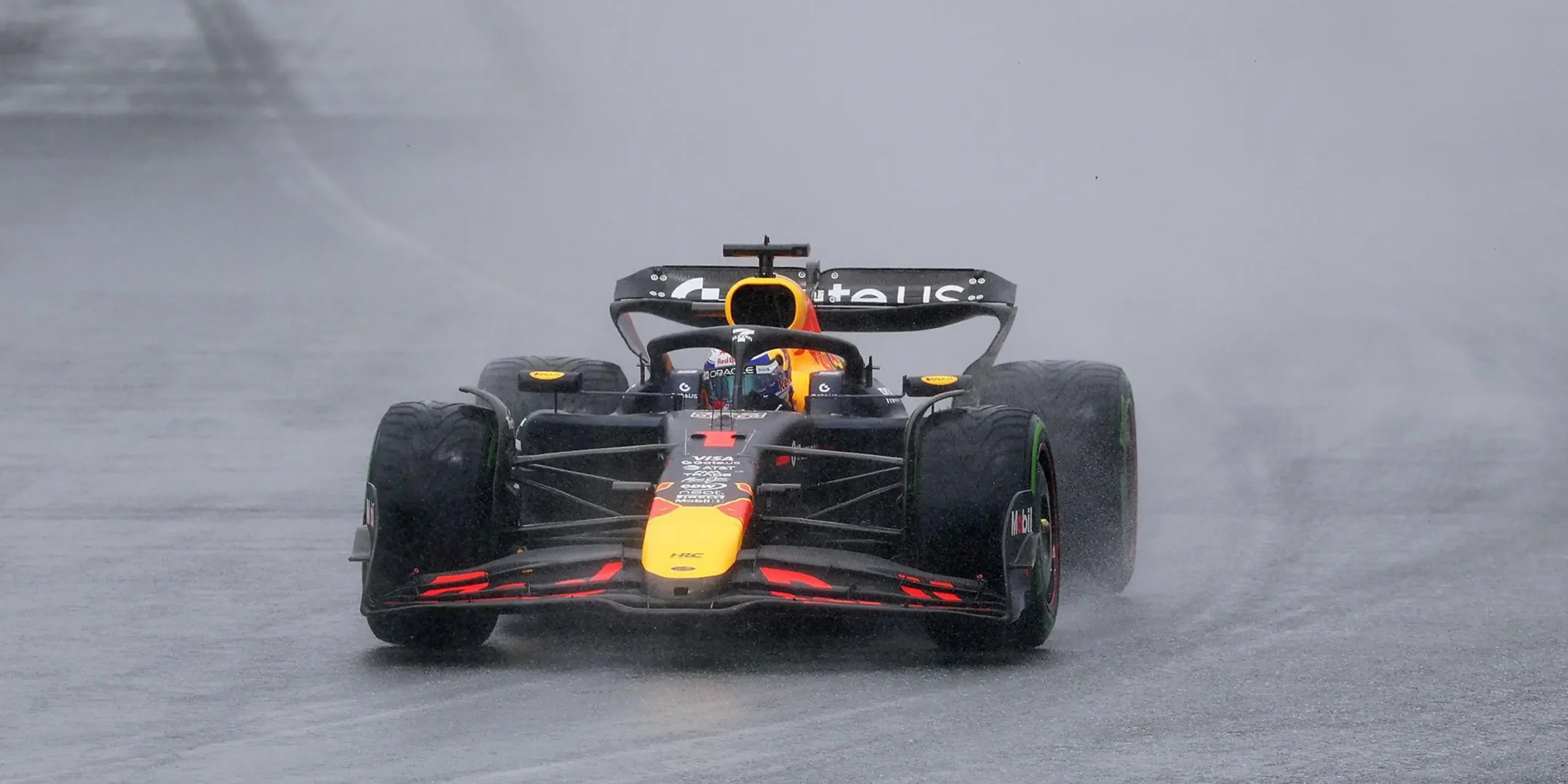
As the field made its way around the circuit, Max Verstappen suddenly realised something wasn’t right.
He couldn’t accelerate properly.
Shortly afterwards, Lewis Hamilton began experiencing the same issue. Then more cars started slowing.
This wasn’t drivers being cautious in the rain.
Some cars were struggling to generate power at all.
FIA single-seater director Nikolas Tombazis later described some of them as coming almost to a standstill.
These were Formula 1 cars.
On a Formula 1 circuit.
And they were practically crawling.
For anyone who follows kart racing, the contrast is almost funny. A go-kart track is usually about getting on the throttle as early as possible, carrying momentum and making the most of every acceleration zone.
Here, the drivers were effectively waiting for their cars to remember how to accelerate.
Then things got even stranger
Imagine being stuck behind someone moving incredibly slowly on a normal road.
You go around them.
Easy.
Except this wasn’t a normal road.
It was a formation lap, where drivers generally aren’t supposed to overtake.
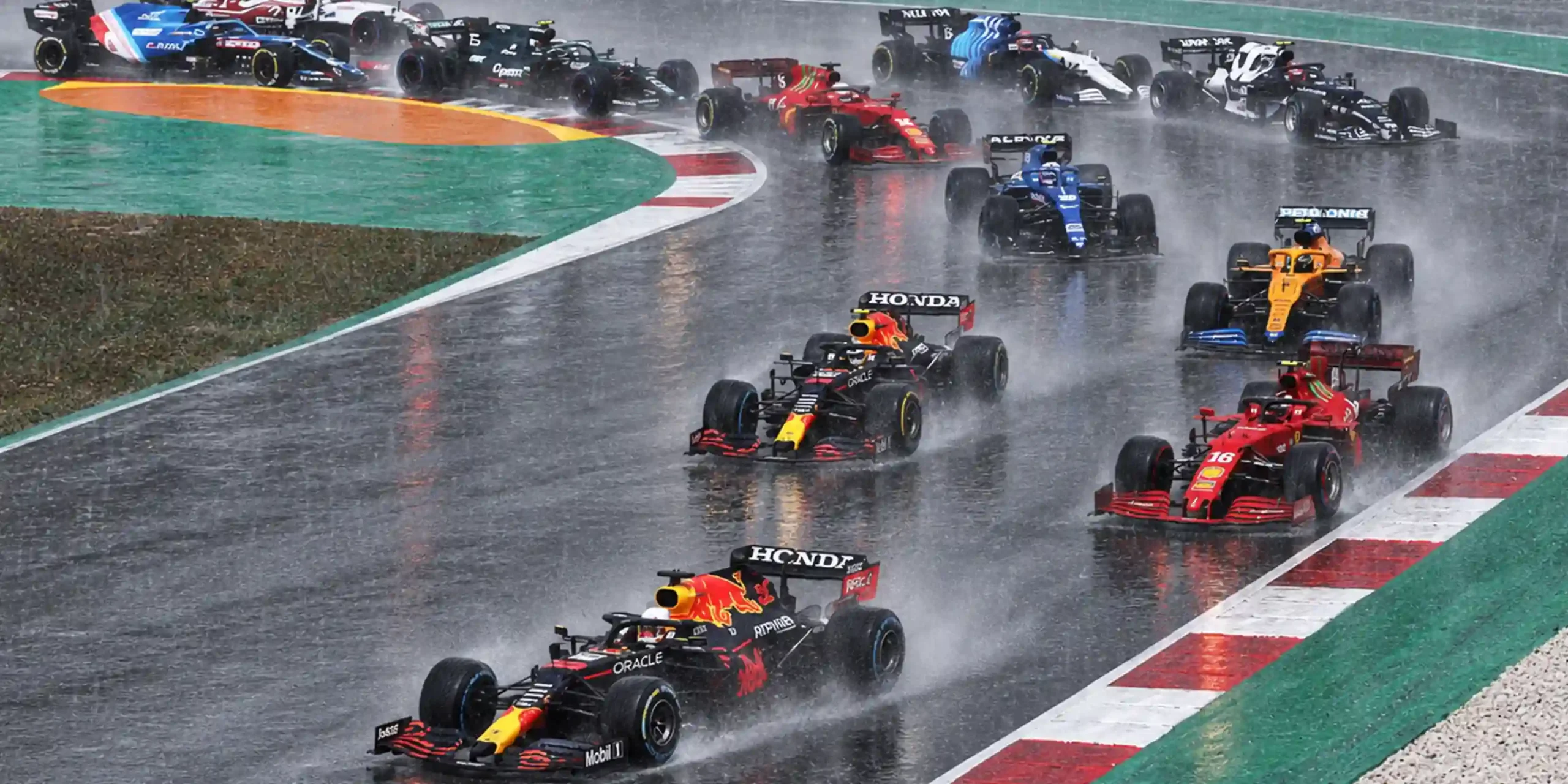
So as some cars slowed dramatically and others tried to understand what was happening, the field started bunching up.
At one point, cars were reportedly running five-wide down the straight.
Kimi Antonelli called the situation “insane.”
What should have been an orderly formation lap had turned into 20 drivers trying to figure out why some of their cars suddenly didn’t want to race.
And because everyone was dealing with the problem at slightly different times, nobody could be completely sure what was happening around them.
For drivers, that creates another problem: unpredictability.
Even on a karting race track, knowing what the drivers around you are likely to do is a major part of racecraft. When everyone suddenly starts behaving differently because of a technical issue, the normal rhythm of racing disappears.
So, what actually happened?
The rain certainly played a role but not in the way you’d expect.
The problem involved the 2026 power-unit software, wet-weather energy management and the unusually low speeds at which the cars were travelling.
Following the Safety Car on a wet circuit meant the drivers couldn’t simply accelerate as they would during normal racing.
That created an unusual combination of very low speeds and wet-weather energy settings.
And the software didn’t quite know what to do with it.
The system prevented electrical power from being redeployed properly, leaving affected cars with little or no acceleration.
So the engines weren’t simply “broken.”
The cars had effectively encountered a scenario their software wasn’t prepared to handle.
That’s what made the incident so unusual.
The hardware was there. The power was there. The drivers were ready.
The software simply wasn’t allowing the cars to use everything available to them.
Even Max wondered if everyone was waiting for him
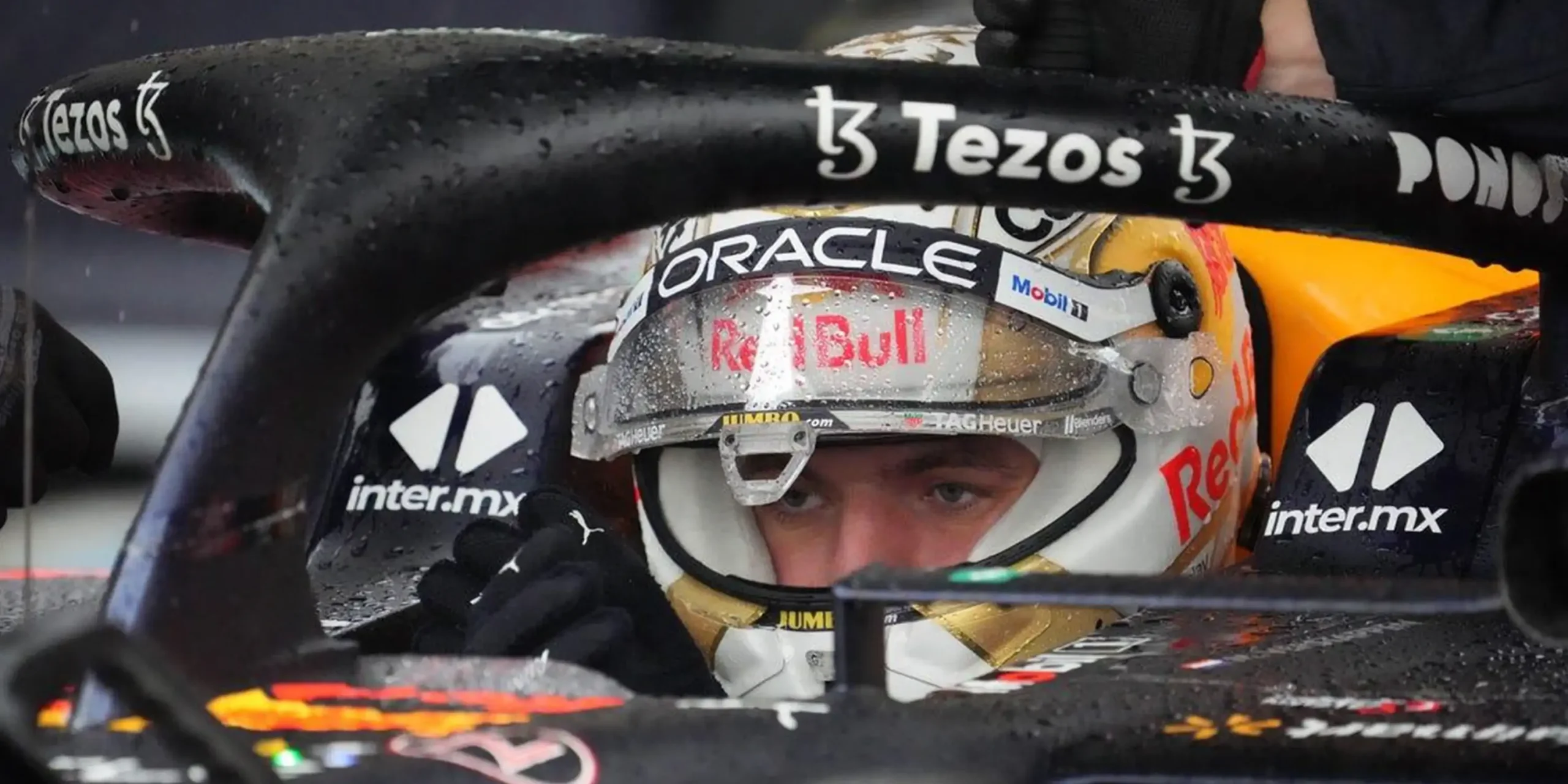
Verstappen was the first driver to trigger the problem.
Initially, even he wasn’t entirely sure what was happening. He reportedly looked in his mirrors and wondered whether the rest of the field was simply waiting for him to get going.
Then he realised other drivers were having exactly the same issue.
Later, he joked about the bizarre scenes and compared them to the Lego race held at Silverstone.
Except this time, nobody had signed up to drive slowly.
That’s probably the strangest part of the whole story.
Imagine being a Formula 1 driver, sitting inside a car capable of extraordinary acceleration, and wondering whether the drivers behind you are simply waiting for you to speed up.
Only to discover that their cars are having the exact same problem.
Hamilton had to reboot his F1 car
Then came perhaps the most wonderfully modern part of the whole incident.
Lewis Hamilton was told the issue was software-related.
The solution?
Stop the car and restart it.
Yes, essentially the motorsport version of turning it off and on again.
Hamilton later said he’d never had to do anything like it during a race weekend before.
For a sport built around some of the world’s most advanced automotive technology, the fix sounded suspiciously familiar to anyone who has ever owned a temperamental laptop.
The irony was almost too perfect.
A Formula 1 car, surrounded by engineers, data systems and cutting-edge technology, needed the oldest troubleshooting technique in the book.
Switch it off.
Switch it back on.
Try again.
Eventually, Race Control pulled the plug
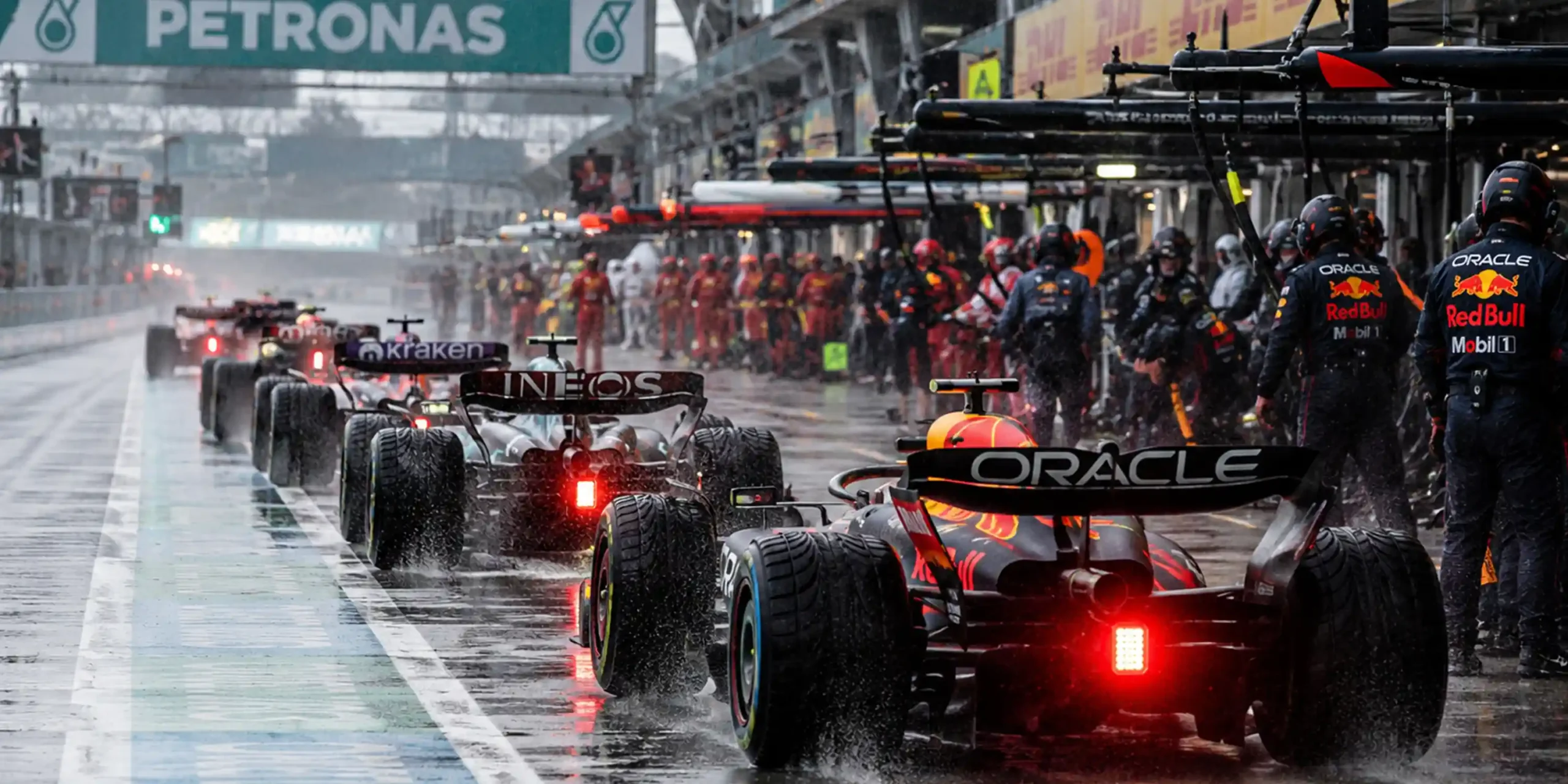
With multiple cars affected, continuing the start procedure wasn’t realistic.
Race Control suspended the start.
The cars returned to the pit lane, the formation procedure was effectively reset, and the original grid order was restored.
Now the FIA and the teams had another race on their hands:
Find the bug before the actual race could begin.
They identified the software problem and prepared an updated release that removed the relevant energy constraint in the affected sectors. Then every team had to install it.
The process took around 53 minutes from the suspension of the start to the race finally getting underway again.
Not because of a crash.
Not because the rain had become impossible.
Because the cars needed an update.
It was an unusual reminder that modern motorsport isn’t only about tyres, engines and aerodynamics anymore. Software has become part of the racing machine itself.
And when that software encounters something it wasn’t prepared for, even the world’s fastest cars can suddenly become very slow.
The timing couldn't have been better. Or worse.
There was one particularly awkward detail.
This was the first wet-weather race of the 2026 season.
The FIA acknowledged that there hadn’t been enough wet running during testing to expose the issue beforehand.
So a combination of circumstances came together at exactly the wrong moment: the software hadn’t properly encountered wet conditions, the cars were travelling at unusually low speeds and the new energy-management system was being used in a situation it hadn’t experienced sufficiently during testing.
All of it finally came together during an actual Grand Prix weekend.
Of course it did.
It’s almost the perfect example of why motorsport testing is so important. A system can behave perfectly under hundreds of simulated or controlled scenarios and still encounter something nobody expected when real-world conditions combine in a different way.
And after all that, they actually raced
Software updated.
Cars restarted.
Grid restored.
Almost an hour after the strange scenes began, the Bahrain Grand Prix finally got underway again.
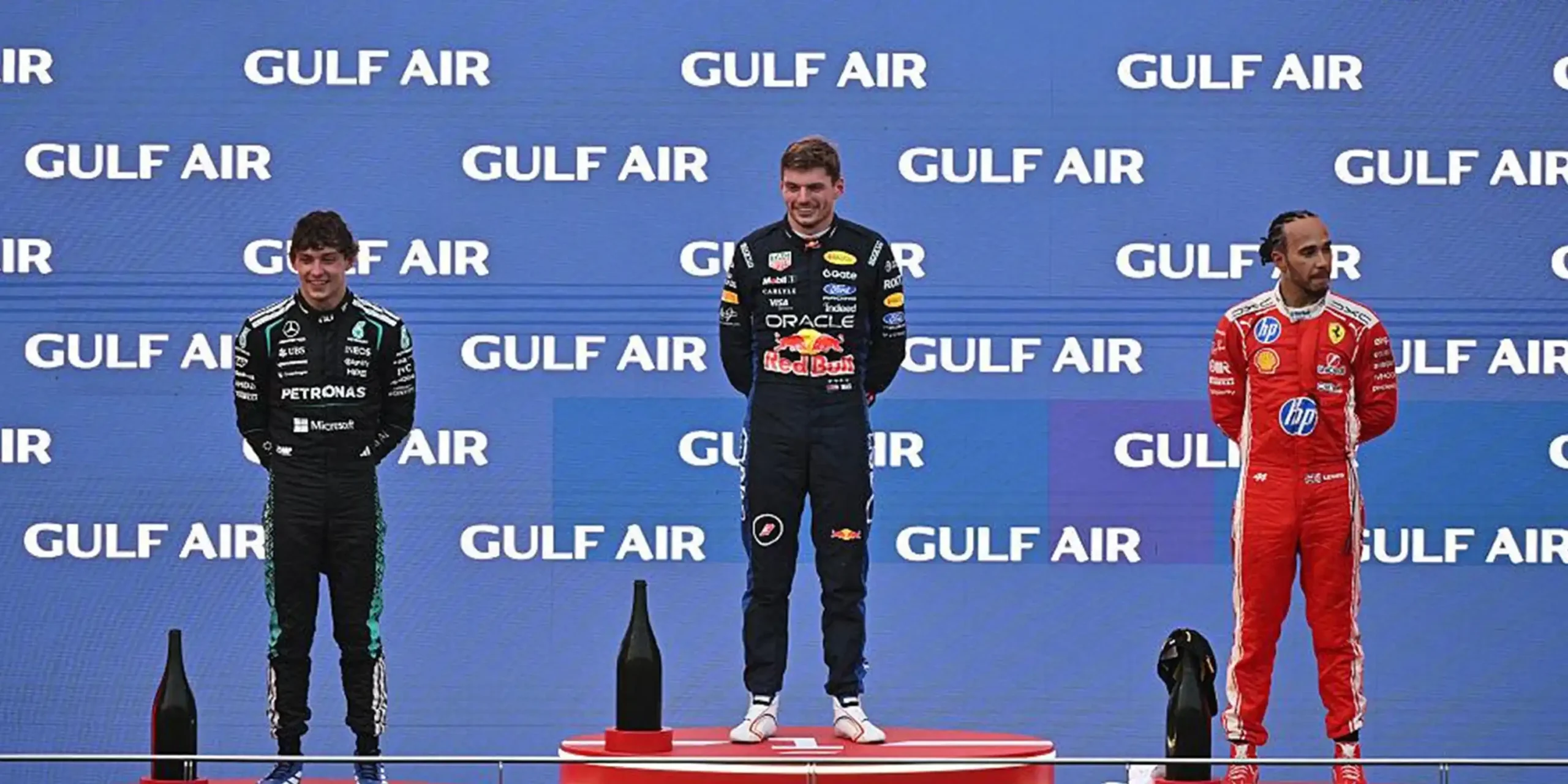
And after being the first driver to discover that his F1 car suddenly didn’t want to accelerate, Verstappen went on to win from pole.
Antonelli finished second.
Hamilton, whose Ferrari had quite literally needed a reboot, recovered to finish third.
A surprisingly normal podium after an extremely abnormal start.
Because Formula 1 is usually a battle over milliseconds, aerodynamics, tyre temperatures and finding the absolute limit of a racing car.
But every once in a while, even the pinnacle of motorsport encounters a problem the rest of us know very well:
Have you tried turning it off and on again?
And while most of us aren’t getting into a Formula 1 car anytime soon, the fascination with racing starts much closer to home. Whether you’re looking for go karting in Mumbai, go karting in Virar, go karting in Nashik, go karting in Indore or go karting in Ahmedabad, the basic thrill remains the same: get on the track, find your rhythm and see how fast you can go.


